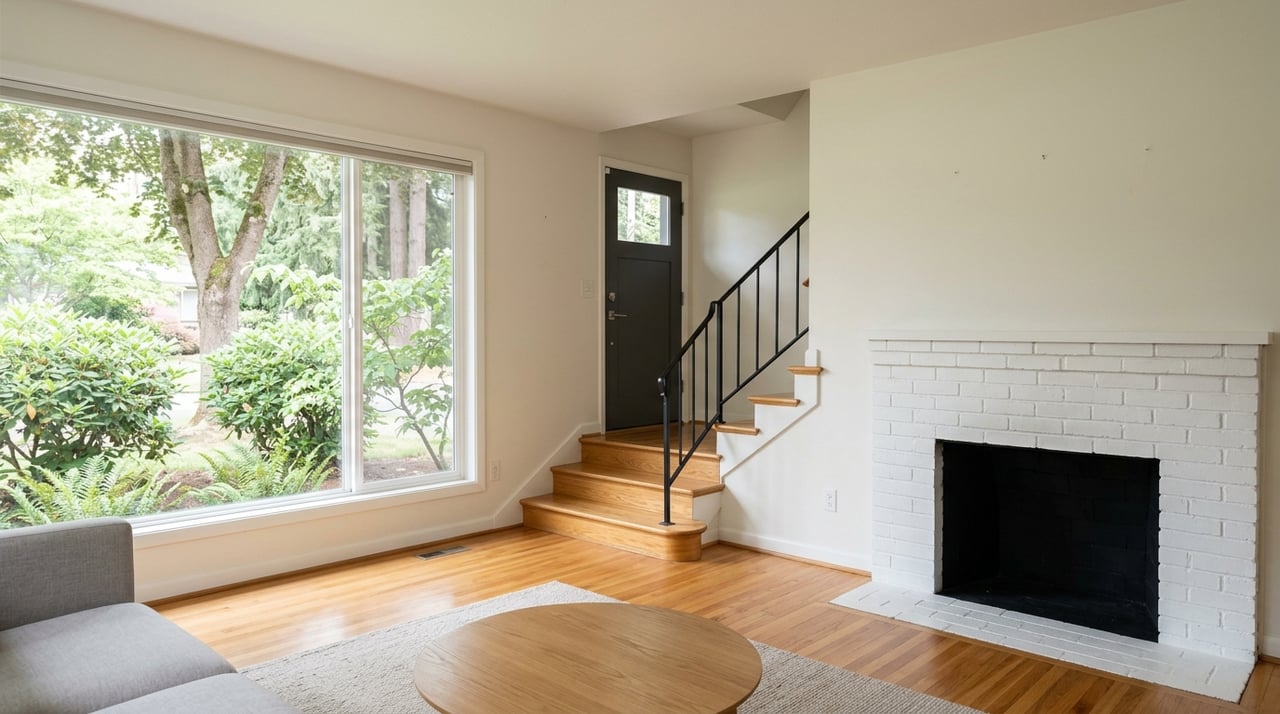
Barboursville Home Pricing Guide for Smart Sellers
May 21, 2026
May 21, 2026
If you price your Barboursville home too high, you may miss the buyers who would have acted quickly. If you price it too low, you risk leaving money on the table. In a market that looks balanced on paper but still reacts fast to price and condition, getting the number right matters. Here is how to think through a smart pricing strategy for your Barboursville home and what local data says right now.
As of March 2026, Barboursville had 62 homes for sale, a median listing price of about $195,000, a median price per square foot of $151, and a median days on market figure of 17. Homes were selling at about 98% of list price on average, which means sellers were typically landing slightly below asking. That tells you buyers are active, but they are still paying attention to value.
The 25504 area shows a similar pattern, with a median listing price of $199,900 and the same 17-day median days on market. That is useful because it shows pricing should be built from the most local data first. Broad county numbers can help with context, but they should not drive your list price on their own.
Cabell County and Huntington both influence buyer expectations, but they do not mirror Barboursville exactly. In the same March 2026 data, Cabell County showed 400 homes for sale, a median listing price of $164,900, and 40 median days on market. Huntington showed 274 homes for sale, a median listing price of $149,000, and 46 median days on market.
Barboursville also showed a higher median price per square foot than Huntington. That matters because buyers may accept a Barboursville premium, but only when the home’s condition, updates, and presentation support it. If your home is priced above nearby competition without a clear reason, buyers may move on.
You may have already checked online value estimates, and that is understandable. Zillow estimated the average Barboursville home value at $210,407 as of April 30, 2026, while Redfin reported a March 2026 median sale price of $255,000 with 25 days on market. Those numbers are not necessarily wrong, but they are measuring different things.
That is why online estimates should be treated as background, not as your pricing strategy. A real pricing decision should come from a local comparative market analysis, often called a CMA, built around homes that truly compete with yours.
A strong asking price is not based on square footage alone. Pricing should reflect your home’s size, location, amenities, condition, upgrades, renovations, needed repairs, and the current market. Your timing matters too.
If your goal is to move quickly, a more competitive price may make sense. If you have more flexibility, you may choose a higher starting point, but that only works if the market supports it. In Barboursville, where homes can move in a little over two weeks, the wrong first price can cost you early momentum.
Barboursville’s active inventory shows a wide range of price points. Entry-level homes are listed around $150,000 to $170,000, move-up homes are around $325,000 to $385,000, and premium properties can reach roughly $650,000 to $900,000. Recent sold examples ranged from about $140,000 to $499,900.
That spread shows something important. Two homes with similar square footage can fall into very different price bands depending on updates, lot size, maintenance, and overall presentation. A home with dated finishes or visible repair needs may not command the same price as a similar home that feels move-in ready.
A comparative market analysis should start with properties from the same market area whenever possible. The best comparable sales are generally similar in site, room count, finished area, style, and condition. Closed sales from the last 12 months are the foundation, and a solid analysis usually includes at least three closed comparables.
Active listings and pending sales can support the picture as well. Sold homes help show what buyers actually paid, while active listings show your current competition. Pending homes can offer clues about where buyers are willing to meet the market right now.
For most Barboursville sellers, that means looking at recent sales in 25504 or nearby Barboursville first. If the local comp pool is limited, or if your property is unusual, it can make sense to look at nearby competing areas such as Huntington, Pea Ridge, or broader Cabell County. But those comparisons should be adjusted carefully because pricing and buyer expectations can differ.
The best comp is not always the house with the exact same square footage. It is the house a buyer would have seen as a realistic alternative to yours. That may include similar layout, lot type, age, finish level, and condition.
If your home has updated kitchens or baths, a larger lot, or a more polished overall feel, that should be reflected in pricing. If it needs repairs or cosmetic work, that should be reflected too. Buyers compare homes side by side, even when sellers do not.
The first days on the market often matter most. With median days on market at 17 in Barboursville, buyers are clearly watching new listings. If your home enters the market overpriced, you may miss the period when interest is naturally highest.
A stale listing can become harder to reposition later. Price reductions sometimes help, but they can also raise questions for buyers who wonder why the home did not sell earlier. Starting with a realistic, well-supported list price often creates stronger interest from the beginning.
Pricing too aggressively does not just affect showings. It can also create appraisal problems once you accept an offer. Appraised value is tied to recent similar sales and market trends, and if the appraisal comes in below the contract price, the buyer’s lender may not approve the full loan amount.
That can lead to renegotiation, delays, or a failed transaction. A defensible price helps protect your sale from that kind of friction. In a market where homes are already selling slightly below asking on average, a grounded pricing strategy can be a real advantage.
West Virginia’s broader housing supply remains tight compared with pre-2020 levels, according to the West Virginia Housing Development Fund’s 2025 housing needs assessment. That backdrop continues to support prices across the region. But tight supply does not mean every home can name any price and expect buyers to agree.
In Barboursville, the data points to a market that is fairly balanced and still sensitive to value. Buyers may move quickly, but they are also comparing condition, location, and price very carefully. That is why the best pricing strategy blends market opportunity with discipline.
If you are getting ready to sell, here is the clearest takeaway: your list price should be built from recent same-area sales, your current competition, and honest adjustments for condition, updates, and repairs. Countywide averages and online estimates can provide context, but they should not replace a local analysis.
For many sellers, the goal is not just to list. It is to list with a number that attracts attention, supports the appraisal, and gives you the strongest chance of a smooth sale. That is where local market knowledge and careful positioning make a difference.
When you are ready to price your Barboursville home with a strategy built for today’s market, Christina Di Filippo can help you evaluate the right comps, understand your competition, and prepare your home for a confident launch.

Whether you’re ready to sell your home, curious about its value, or just exploring your options, Christina and David Di Filippo are here to guide you. Let’s connect and start turning your real estate goals into reality.