Huntington WV Rental Property Registry Inspection: Price Your Duplex Offer
July 16, 2026
July 16, 2026
Every buyer closing on a Huntington rental this year will get two inspections. The first is the one your lender wants. The second is the one the City of Huntington wants, and it is the one that will actually decide what your duplex is worth on day one of ownership.
That second inspection is written into Article 1737 of the city code, and its most consequential clause is buried in the rental registry packet: inspection is required for new buildings, new owners, or a change in occupancy or use. Buying a rented duplex from a landlord who has held it since the Bush administration does not inherit their compliance record. The clock resets when you sign.
Non-local buyers routinely miss this. In a market where sellers have less leverage than they have had in years, missing it is the difference between a duplex that cash-flows in month one and a duplex that costs you the first year's NOI in code cures.
The ordinance itself was adopted by City Council in 2018. What changed is enforcement scale and market conditions.
Three city housing inspectors have been working the one- and two-family stock since April 2021, and the City of Huntington reports over 1,230 completed inspections through the most recent posted figures. The city's baseline for what they will find is a 2020 Bloomberg Harvard City Leadership Initiative report, cited by the Herald-Dispatch, which found 63 percent of the city's 9,603 rental units were in decline and estimated 60 to 80 percent were code non-compliant at the time of the study.
Read that number twice. If you are looking at a duplex in Westmoreland, Highlawn, Southside, or near Marshall University, the base rate says the property probably has open items an inspector will write up. The seller has priced the property as if it does not.
Meanwhile the leverage side of the transaction has shifted. Houzeo's Huntington data for February 2026 shows a sale-to-list ratio of 93.3 percent and 152 days on market at the citywide level, with only 1.2 months of supply but essentially no homes selling over asking. Multi-family inventory tells the same story from the other side: 14 active duplexes averaging roughly $166,000 as of the most recent scrape, with median duplex time-on-market around 55 days. Sellers are not choosing between buyers. They are trying to keep the buyer they have.
That is the mechanism. A softer sale-to-list ratio is not just a discount you can ask for. It is the room in which you can hand the seller a cure list from Article 1737 and ask them to eat it.
The rental registry packet lists the code books inspectors work from: NEC 2020 for electrical, IRC 2018 for residential building, IPC 2018 for plumbing, and the West Virginia State Code sitting behind all of it. The specific items called out in the packet as pass-fail:
None of these are exotic. All of them are common failures in the Southside Historic District and West End housing stock, where knob-and-tube retrofits, undersized panels, and unvented interior baths are inspection-flag magnets. If violations are found, the owner has 10 days to cure them, and the reinspection fee is $50 per return trip. Failure to register the property at all carries fines of $200 to $500 per offense and $100 per month in ongoing penalties per unit.
Then there is the paperwork the closing attorney will not surface unless asked. A rental in Huntington requires both a Municipal Business License, on a July 1 to June 30 cycle, and a separate Residential Rental Unit License. Tenants can also request an inspection directly, without the landlord's consent. If you buy a duplex with a disgruntled tenant already in place, you may not get to choose your timing.
Here is where local knowledge is worth more than any pro-forma spreadsheet.
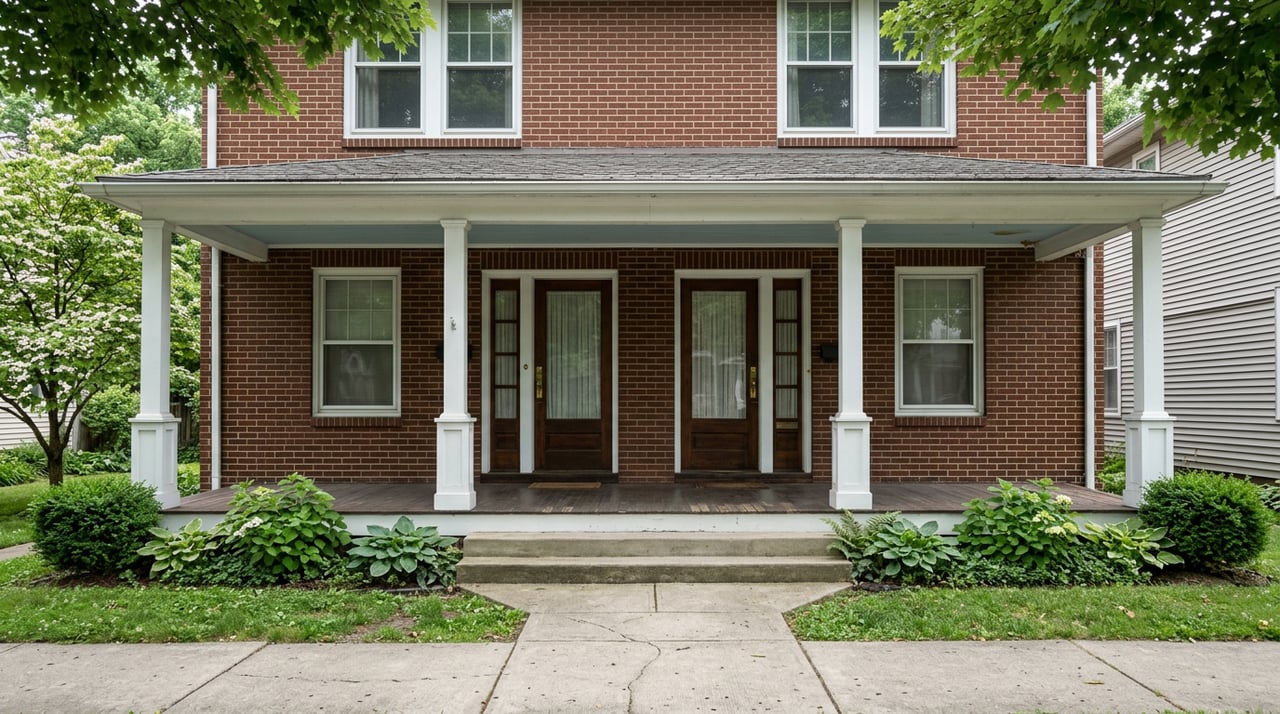
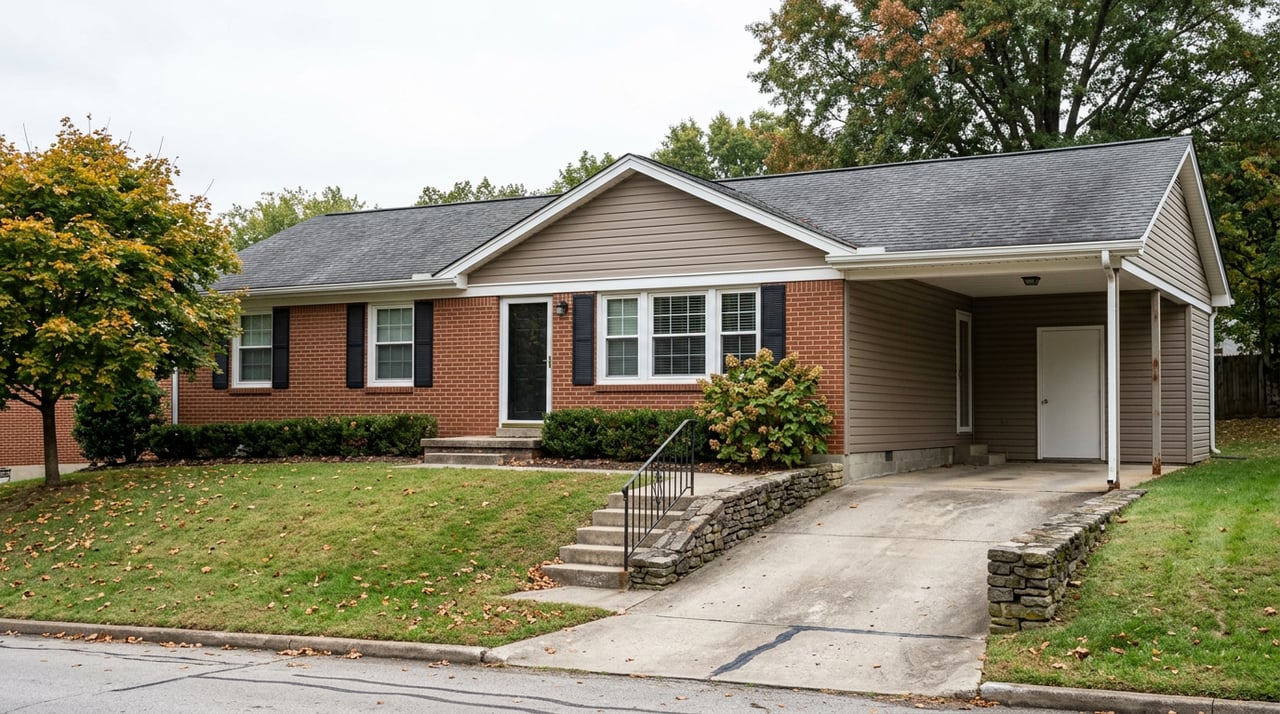
Take a two-unit brick duplex in Westmoreland listed at $145,000, tenanted, 1950s stock, original panel, gas-fired boiler, no visible CO detectors in the photos. A national buyer running the numbers off the listing photos will pencil it at a 9 to 10 cap and offer at ask. A local buyer running the same property against Article 1737 will assume, at the base rate, roughly $6,000 to $12,000 in first-year cure costs: panel work, detectors and cover plates, one bath fan installation, handrail correction, water heater temperature check, and at least one reinspection fee.
That is not a repair credit request. That is a change in the price the property should trade at, because the cure list is a fixed cost of putting the unit back on the rent roll under the current ordinance. In a market where the average Huntington duplex is closing at 93 cents on the list dollar, the room to move exists. In a 2021 seller's market, it did not.
The corollary is that the true bargains in Huntington's small-multi inventory right now are not the lowest-priced duplexes. They are the ones already on the registry with a recent clean inspection on file. That paperwork is worth real money and rarely shows up in the listing description. Ask for it before you write.
West Virginia requires an attorney at closing, and Cabell County stacks its own excise tax on top of the state's. The state charge is $1.10 per $500 of sale price. Cabell County adds another $0.55 to $1.65 per $500, plus a flat $20 fee. On a $175,000 duplex that works out to roughly $580 to $600 in transfer taxes before you count the attorney bill, which typically runs $500 to $1,500 for a straightforward residential closing.
None of that is unusual for West Virginia. What is unusual is that Huntington layers a municipal business license, a rental unit license, and an inspection cycle on top of a closing that a buyer from Columbus or Lexington expects to be a clean handoff. Ten West Virginia cities have some version of a rental registry. Huntington's is one of the more actively enforced.
If the seller is not currently renting the unit, does Article 1737 still apply at closing? The trigger for a licensing inspection is placing the unit into rental service, not the closing itself. If you intend to rent, you register and inspect before a tenant moves in. Buying a vacant former rental gives you more sequencing control than buying an occupied one.
What if I plan to owner-occupy one half of a duplex and rent the other? The rented half is a rental unit under the ordinance and requires registration, licensing, and inspection. Duplexes are explicitly enumerated in the one- and two-family dwelling inspection program.
Does the seller's disclosure package have to mention open code violations? West Virginia is a caveat emptor state, and the standard residential disclosure is narrower than in many neighboring markets. Ask directly, in writing, whether the property is on the rental registry, whether any inspection has been performed, and whether any violations remain open. Silence in the disclosure is not the same as a clean file.
How long does the licensing inspection actually take to schedule? The Inspections and Permits Office keeps limited public hours, 8 to 9 a.m. and 3 to 4 p.m. on weekdays, and appointments are scheduled by phone at 304-696-5540. Realistic lead time from application to inspection has been running two to four weeks. Build that into your rent-up timeline.
If you are looking at a small multi in Huntington and want a read on which listings are already clean under Article 1737 and which ones are carrying a hidden cure list, Home in WV works these blocks routinely. Schedule your free consultation and we will walk the numbers on your specific property before you write the offer.

Whether you’re ready to sell your home, curious about its value, or just exploring your options, Christina and David Di Filippo are here to guide you. Let’s connect and start turning your real estate goals into reality.