Huntington's Median Home Price Is Actually Three Different Markets Wearing One Number
August 13, 2026
August 13, 2026
Pull three different sources for Huntington's home prices this year and you get three different Huntingtons. Zillow's home value index, updated May 31, 2026, put the city average at $144,412. Redfin's own city page, refreshed the same month, showed a median of $153,783. A third data provider tracking closings over the same rough window landed at $160,000. Redfin's page also carried a leftover snapshot from November 2025 showing year-over-year growth of 26.8 percent, while its May 2026 update showed growth of just 0.5 percent for the same city.
None of these numbers is broken. They are each averaging over a city that stopped behaving like one housing market years ago, and the disagreement between them is the tell. Redfin's own transaction count for November 2025 showed just 25 homes sold that month, down from 30 the year before. When your monthly sample is that thin, a single unusual closing can swing the citywide percentage by double digits without a single home actually changing in value. If you are comparing a Huntington listing to "the median," the first question worth asking is which Huntington that median is describing, because there are at least three, and Marshall University draws two of the three lines.
Walk the paths around Ritter Park and you are inside the oldest, most stable version of Huntington's housing stock. The park itself dates to 1908, when the city bought 55 acres for a proposed incinerator that neighbors successfully blocked, and it grew to its current 75 acres after businessman Charles Lloyd Ritter donated an additional 20 acres. It opened as a public park on September 11, 1913, and in 2012 the American Planning Association named it one of the country's Great Public Spaces, citing its integration into a surrounding national historic district built out between 1913 and 1940.
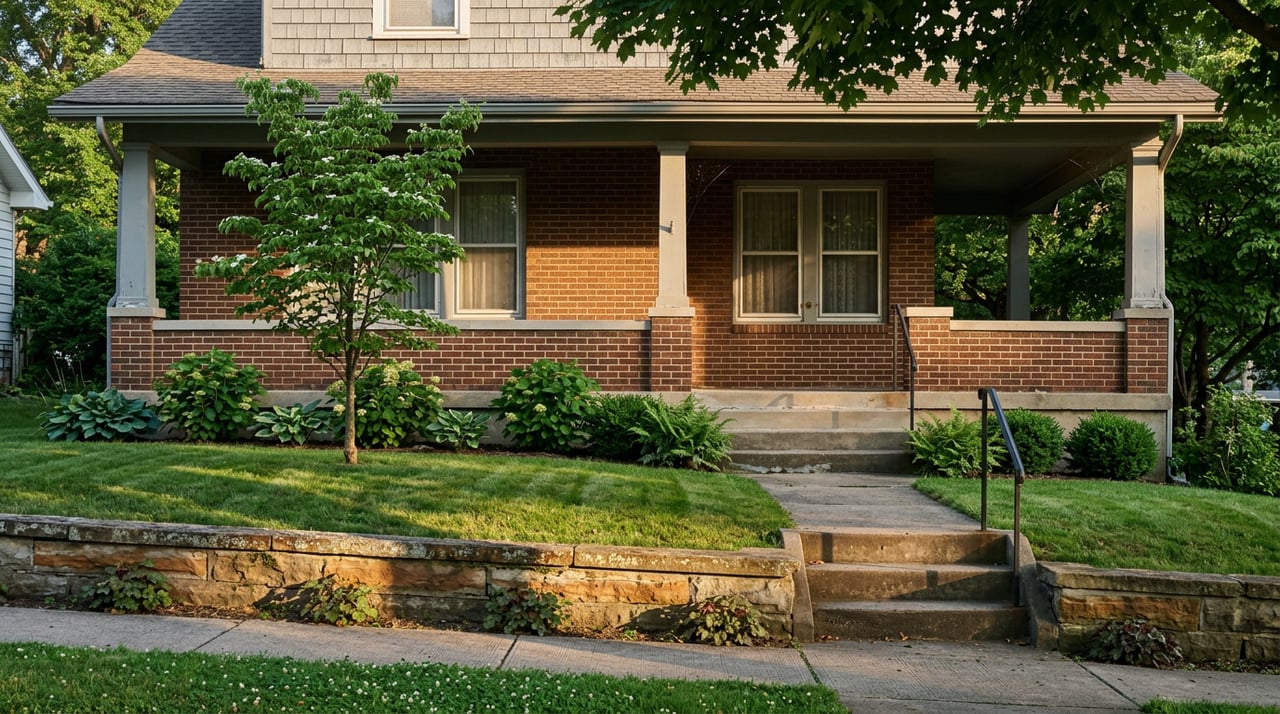
That historic district is the anchor for Fairfield and Southeast Hills, the neighborhoods immediately around the park. Southeast Hills runs from roughly 800 to more than 8,000 square feet across its housing stock, a range wide enough to cover a starter bungalow and a hillside estate on the same street. Fairfield sits along Hal Greer Boulevard, named for the first Black athlete to receive a Marshall University athletic scholarship, and the corridor is mixed use by design, blending single-family Craftsman and colonial homes with Cabell Huntington Hospital's 303-bed campus. The Fairfield Community Development Corporation has spent recent years demolishing blighted structures, 162 of them between 2017 and mid-2020, and has partnered with Huntington Bank on a purchase structure that pairs an 80 percent conventional loan with a 15 percent no-payment second loan against a 5 percent down payment, a program built specifically to convert rental stock back into owned homes. This is the submarket where ownership, not vacancy, is the default condition, and it is the one that behaves the way a "median home price" is supposed to behave: slowly, and mostly in one direction.
Highlawn tells a different story, and it starts with who lives there. Neighborhood-level data shows 35.4 percent of Highlawn South residents are currently enrolled in college, a share high enough that the neighborhood's character visibly shifts with the semester calendar. The same data puts the area's vacancy rate at 30.2 percent, higher than roughly 95 percent of neighborhoods nationally, and most of the housing stock predates 1939. The area's median real estate price sits around $102,895, well under the citywide figures quoted above. That price is not a bargain sitting undiscovered. It is the direct result of a housing stock built for turnover rather than tenure, sitting a short walk from a campus with more than 11,000 students whose fall move-in runs August 11 through 16 this year.
But Highlawn is not just a rental submarket waiting to be discovered by investors chasing cheap entry prices. It sits directly on top of one of the largest active redevelopment plans in the region. The city and the Huntington Municipal Development Authority have spent years advancing the Huntington Brownfields Innovation Zone, a plan to redevelop the roughly 75 to 78 acres of former heavy industrial land along the Ohio River once occupied by the ACF Industries rail car plant, the Ingram Barge site, and the McGinnis property. City planning documents originally anchored the project around Rubberlite's Polymer Technology Center of Huntington, known locally as PolyTeCH, and the current master plan envisions more than a million square feet of mixed use, including a hotel and conference center, nearly 100,000 square feet of retail, and expanded advanced manufacturing space, all positioned between the river, Marshall's campus, and downtown. That is a meaningfully different investment thesis than "cheap rental stock near a college." An investor pricing Highlawn off its current vacancy rate alone is pricing the neighborhood as it exists today, not as the city's own redevelopment plan says it is meant to become.
West Huntington shows the cleanest example of what happens when a housing submarket is simply too small to trust a percentage. Redfin's own neighborhood page reported a median sale price of $75,000 for the three months ending April 2026, up 108 percent from the same period a year earlier. That sounds like a neighborhood on fire. It is really a neighborhood where 15 homes sold in the window, compared to just 5 the year before. Tripling your closing count while shifting the mix of homes that happen to sell can move a median by triple digits without a single dollar of real appreciation behind it. Days on market fell from 168 to 99 over the same stretch, which is genuine improvement, but 99 days still runs more than double the 43-day citywide average Redfin reported for Huntington as a whole in its November 2025 snapshot.
West Huntington's actual character is closer to its housing stock than its headline percentage: early to mid-century Craftsman homes, St. Cloud Commons park, and a slowly rebuilding commercial strip along 14th Street anchored by businesses like Cicada Books & Coffee and the Midway Drive-In. The city's Main Street America program has targeted the corridor for an arts and culture district designation, and small-grant facade and beautification work has been ongoing for several years. That is a real, if gradual, improvement story. It is just not the 108 percent story the headline number implies.
Here is the same comparison side by side.
| Submarket | What actually anchors the price | Why the number moves the way it does | Who the submarket is built for |
|---|---|---|---|
| Ritter Park corridor (Fairfield, Southeast Hills) | 1913 to 1940 historic district around a 75-acre park | Low vacancy, stable ownership, slow and steady appreciation | Families and move-up buyers who want a walkable, historic street |
| Highlawn / Highlawn South | Marshall's academic calendar plus an active 75 to 78-acre brownfield redevelopment | High vacancy from student turnover keeps entry prices low right now | Long-horizon investors underwriting the redevelopment timeline, not this year's rent roll |
| West Huntington / Central City | A thin sales count, often under 20 closings in a rolling window | Any shift in which homes happen to sell can swing the median double digits | Buyers who verify comp counts before trusting a year-over-year percentage |
If you are pricing a Huntington property against "the median," the practical move is to ask three questions before the number means anything.
None of this replaces a walk through with a local agent who knows which block sits inside the historic district and which one sits inside the brownfield footprint. It just means the citywide median is a starting point for a conversation, not the end of one.
Does West Virginia require a lawyer at closing, regardless of which Huntington neighborhood I am buying in? Yes. West Virginia law requires attorney involvement in residential real estate closings statewide, and that requirement does not change based on submarket or price point.
How are Cabell County property taxes calculated? Cabell County assesses property at 60 percent of appraised market value, and countywide the median annual property tax bill runs well below the national median. Because that figure blends the same three submarkets discussed above, the actual bill on any specific home will track its assessed value, not the countywide average.
When will Highlawn's vacancy rate start reflecting the H-BIZ redevelopment? There is no published completion date tied to a specific year. The redevelopment is being built out in phases by the Huntington Municipal Development Authority, and the neighborhood's rental-driven vacancy pattern tied to Marshall's semester calendar will likely persist alongside construction rather than being replaced by it on a fixed schedule.
If you are weighing a purchase or an investment in Huntington and want to know which submarket a specific listing actually belongs to, Home in WV can walk the comparables with you block by block. Schedule your free consultation.
Whether you’re ready to sell your home, curious about its value, or just exploring your options, Christina and David Di Filippo are here to guide you. Let’s connect and start turning your real estate goals into reality.